Multi-Chain NFT Marketplace with Auctions
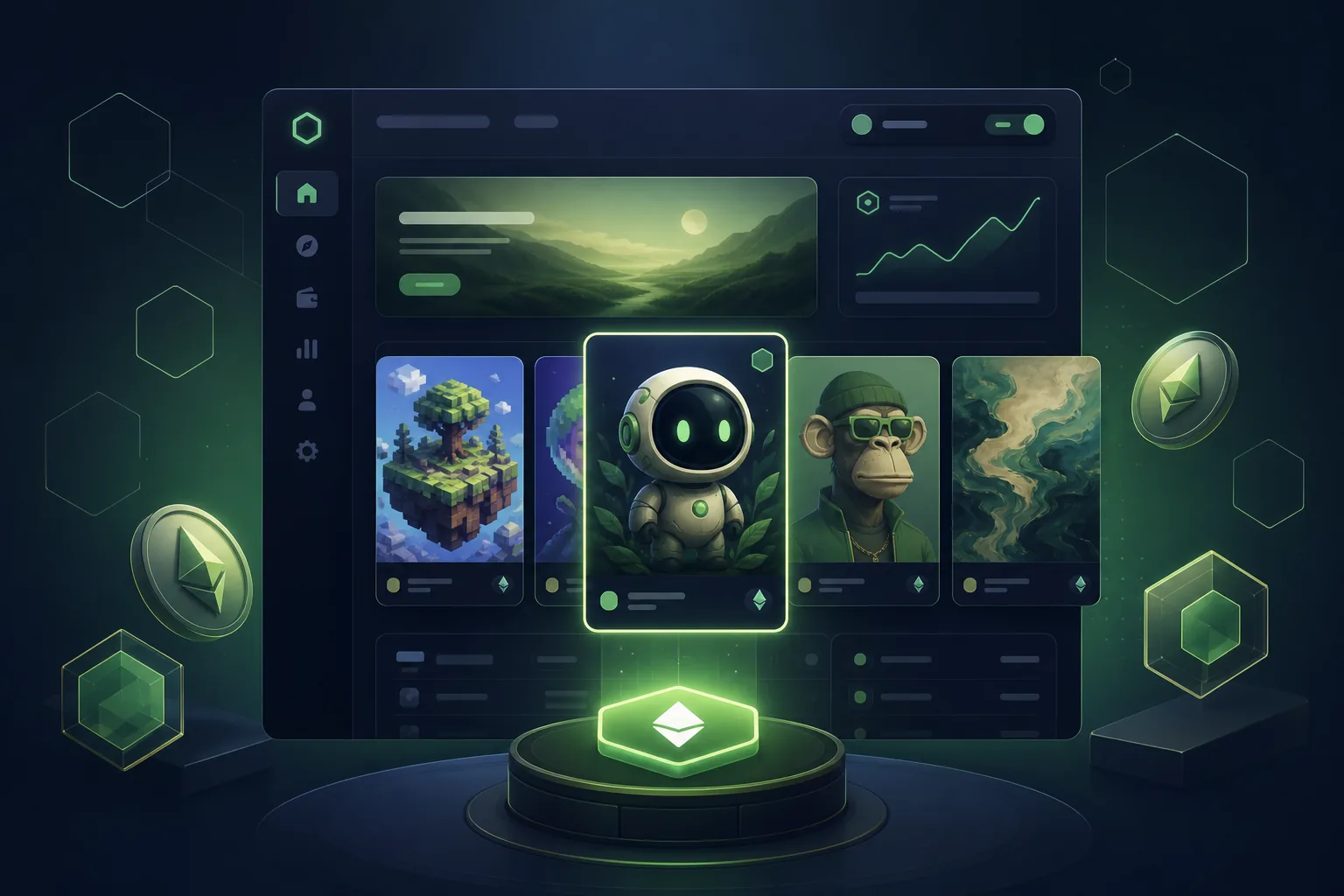
An NFT marketplace where creators mint collections, sell at fixed prices or in timed auctions, and collectors trade from their own wallets across supported chains.
Project overview
We built an NFT marketplace for a startup serving digital artists and collectible brands. Creators set up collections, upload artwork, choose fixed-price or auction sales and set royalties; collectors browse, bid and buy with their own wallets, and resales pay the original creator automatically.
The engagement covered product discovery, marketplace and auction contracts in Solidity, IPFS storage, the Next.js storefront, event indexing and an admin console for curation and moderation. It is part of our blockchain development services and draws on the marketplace patterns we use across multi-vendor platforms.
The client and the challenge
Creators on the client's launch list did not want to pay gas before anything sold, and several wanted to sell on more than one EVM-compatible chain. Collectors needed assurance that artwork and metadata would not vanish if a server went down, and the startup needed a way to handle stolen or infringing uploads without controlling users' assets.
Auctions added their own problems: last-second bids, refunds for outbid users, and keeping listings, bids and ownership in the storefront consistent with what the chain actually recorded. Search also had to stay fast as collections grew, because querying the chain directly for every page view would have been slow and costly.
Solution architecture & delivery
Artwork and metadata are pinned to IPFS and referenced by content identifier, so the token points to a hash of the file rather than a URL we control. Creators can lazy mint: they sign a voucher describing the token, price and royalty off-chain, and the NFT is only minted on-chain when a buyer purchases it, with the buyer's transaction covering gas. The contract verifies the creator's signature and that the voucher has not already been redeemed.
The marketplace contract handles fixed-price sales, offers and English auctions. Bids are held in escrow by the contract; when someone is outbid, their funds become claimable rather than being pushed back automatically, which avoids failed refunds blocking the auction. A bid in the final minutes extends the end time to stop sniping. Royalties follow the common on-chain royalty standard and are paid out in the same transaction as each sale.
Each supported chain has its own deployment of the contracts, and an indexer listens for mint, list, bid, sale and transfer events on every chain and writes them into a single searchable catalogue. The Next.js storefront reads that catalogue for browsing and filtering, but always checks ownership and listing state on-chain before a user signs. Gas estimates, network switching prompts and transaction tracking keep users informed at every step.
Moderation works at the marketplace layer: admins can hide a collection from the storefront, freeze its listings in our contract and mark it for review, but cannot move tokens held in user wallets. Releases and contract deployments went through staged testnets as described in our CI/CD and testing pipeline.
Key features we built
- Collection creation with artwork and metadata pinned to IPFS
- Lazy minting from signed vouchers so creators pay no upfront gas
- Fixed-price listings, offers and timed English auctions
- Escrowed bids with claimable refunds and anti-sniping extensions
- Automatic creator royalties paid on every resale
- Multi-chain deployments with one unified, searchable catalogue
- Gas estimates, network switching and clear transaction status
- Admin console for curation, reports and listing freezes
How we delivered it
- Discovery. Interviews with launch creators and collectors shaped sale formats, royalty rules, chain choices and moderation policy.
- Contract design. Voucher, marketplace and auction contracts were specified and tested with unit and fuzz tests, including adversarial bidding scenarios.
- Build. Two-week sprints delivered the storefront, IPFS upload pipeline, multi-chain indexer and admin console in parallel.
- Audit and launch. An independent contract audit was completed and findings fixed before launching on one chain, followed by further chains once indexing was proven.
- Support. Ongoing support covers indexer monitoring, new chain deployments, featured drops and moderation tooling. Creator onboarding guides and a help centre were written alongside the launch.
Technology choices
- Next.js — server-rendered collection and item pages that search engines can index, combined with client-side wallet interactions.
- Solidity — the language of EVM chains, letting one audited contract set be deployed to each supported network.
- IPFS — content-addressed storage so artwork and metadata are referenced by hash and remain retrievable independently of our servers.
Outcomes
- Creators list work without paying gas until a sale happens
- Artwork and metadata are verifiable by content hash rather than tied to a single server
- Creators receive royalties automatically on secondary sales
- Collectors browse one catalogue across chains instead of separate marketplaces
- Auctions handle outbid refunds and late bids without manual intervention
- The team can moderate reported collections without taking custody of user assets
FAQ
What is lazy minting and why was it used?
The creator signs a description of the NFT off-chain, and the token is only minted when someone buys it. The buyer's transaction covers minting, so creators can list work without paying gas upfront.
How does the marketplace support multiple chains?
The same audited contracts are deployed on each supported chain, and an indexer merges events from every chain into one catalogue. The storefront prompts users to switch network before they sign. A similar indexing approach powers our DeFi staking case study.
Can admins remove stolen or infringing NFTs?
Admins can hide collections and freeze their listings on the marketplace, but tokens in user wallets remain under the owners' control. Reports from users land in a review queue with evidence attached, and every moderation action is logged with the admin who took it. Our crypto gift card and trading exchange case study covers compliance tooling in a related context.
How much does it cost to build an NFT marketplace?
It depends on sale formats, number of chains, minting options and audit scope. Use our app development cost calculator for an indicative range before a detailed estimate.
Multi-Chain NFT Marketplace with Auctions screens
Build your next fintech product with Next Olive
Share your requirements — we will propose scope, timeline and stack within one business day.