
Native Neo-Bank App with Savings Goals
Native Kotlin and Swift banking apps on a Spring Boot platform, giving customers instant payments, card controls, savings goals and simple investing in one place.
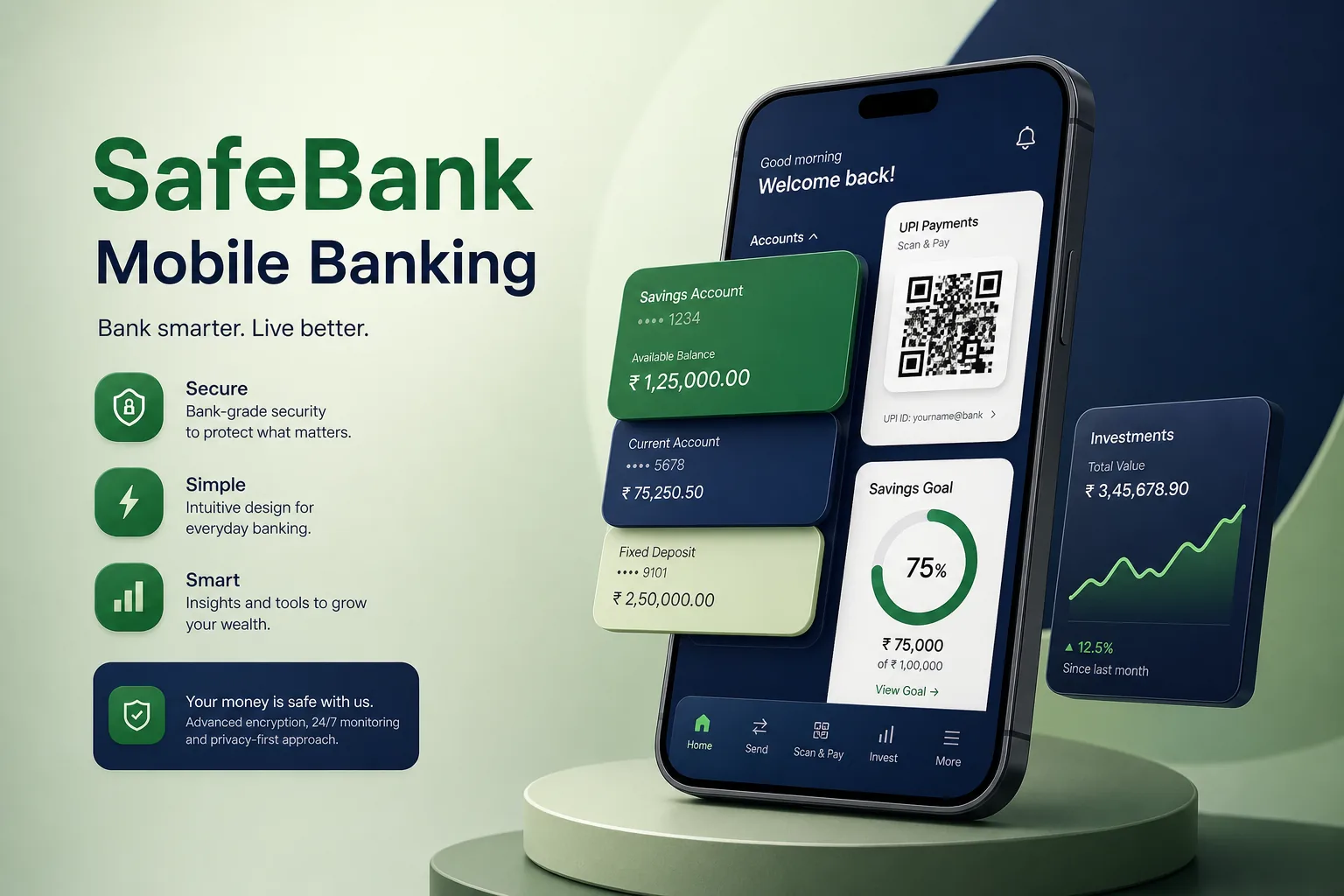
Project overview
We built the mobile banking product for a digital-first bank launching with a licensed banking partner. Customers open an account on their phone, move money instantly, manage debit cards, save towards goals and invest spare cash, without visiting a branch.
Our team delivered native Android and iOS apps, a Spring Boot API layer between the apps and the partner's core banking and card systems, and a back office for support and compliance staff. The project is part of our fintech app development work for banks, wallets and lenders.
The client and the challenge
The partner bank's core system and card processor exposed reliable but batch-oriented interfaces that were never designed for a mobile app polling for balances. The client needed a responsive experience built over them, without weakening the bank's security and audit controls.
Onboarding also had to satisfy know-your-customer checks, consent capture and fraud screening while staying short enough that applicants would finish it on a phone. Every money movement needed strong customer authentication and a complete audit trail. The apps also had to stay usable for customers on older phones and slower networks, since the bank's target audience included first-time digital banking users.
Solution architecture & delivery
We chose fully native apps, Kotlin on Android and Swift on iOS, because the product leaned heavily on platform security: hardware-backed key storage, biometric prompts, secure screen flags that block screenshots on sensitive views, and jailbreak and root detection. Both apps share one API contract and a common design system.
The Spring Boot platform is split into onboarding, accounts, payments, cards, goals and investments services. It keeps a read model of balances and transactions updated from the core banking event feed, so the apps load instantly, while every write — a transfer, a card freeze, a goal deposit — goes through the core system and is only shown as complete once the bank confirms it. Idempotency keys stop a double tap or a retry on a weak connection from sending a payment twice.
Security follows a zero-trust model described in our guide to zero-trust planning for mobile apps. Devices are bound to the customer at enrolment, sessions use short-lived tokens, and payments above a risk threshold or to new payees require a fresh biometric or PIN check. Suspicious patterns are routed to the fraud team's queue, with approaches similar to our AI fraud detection project.
Savings goals move money into ring-fenced sub-accounts through round-ups or scheduled rules. The investment module shows a small range of funds from the bank's distribution partner, with suitability questions and risk disclosures captured and stored before a first order. Goals show progress and projected completion dates, and customers can pause or break a goal at any time with the money returning to their main account.
Key features we built
- Digital onboarding with identity verification, consent capture and fraud screening
- Instant transfers, saved payees and scheduled payments
- Debit card controls: freeze, limits, online and international toggles, PIN view
- Savings goals with round-ups and automatic rules
- Fund investing with suitability questions and risk disclosures
- Biometric login, device binding and step-up authentication for payments
- Real-time transaction notifications with merchant details and categories
- Back office for support, KYC review, disputes and audit history
How we delivered it
- Discovery. Workshops with the client, the partner bank's technology and compliance teams to map interfaces, authentication rules and regulatory requirements before design began.
- UX and security design. Onboarding and payment flows prototyped and tested with target customers, alongside a threat model for devices, APIs and back office access.
- Build. Two-week sprints with Android, iOS and platform squads working to a shared API contract, and integration against the bank's sandbox environments.
- Testing and assurance. Functional, regression and penetration testing with our QA and testing services team, plus review sessions with the bank's compliance staff.
- Staged launch. An employee and friends-and-family release, then a waitlist-based public launch with ongoing feature releases and support.
Technology choices
- Kotlin — native Android development with direct access to the keystore, biometric APIs and platform security features the bank required.
- Swift — native iOS development using the Secure Enclave, biometric authentication and smooth, accessible banking screens.
- Spring Boot — a mature Java framework for secure, auditable services that integrate with core banking and card systems.
Outcomes
- Customers open an account and start using it on their phone without branch visits or paper forms
- Balances and transactions load quickly while the partner's core system remains the source of truth
- Card freezes and limit changes take effect from the app instead of through a call centre
- Savings goals and round-ups give customers a structured way to put money aside
- Support and compliance staff work from one back office with a full audit trail of customer actions
FAQ
Why native apps instead of a cross-platform framework?
The bank's security requirements relied on platform-specific features such as hardware-backed key storage and screenshot protection. Native Kotlin and Swift gave direct access to them; for many other apps we recommend cross-platform, as explained in our Flutter vs React Native comparison.
How does the app work with an existing core banking system?
A Spring Boot integration layer keeps a fast read model for the apps and sends every transaction to the core system, which stays the system of record. The app shows a payment as complete only after the core confirms it. If the core system is briefly unavailable, requests are queued with a clear pending status rather than failing silently.
How were compliance and privacy handled?
Consent, KYC results and disclosures are stored with timestamps, personal data is encrypted in transit and at rest, and back office access is role-based and logged. The bank's compliance team reviewed flows before launch; our wallet app follows the same principles.
How long does it take to build a mobile banking app?
Timelines depend on the core banking integration, onboarding checks and feature scope for launch. Our app development cost calculator gives an early estimate, and we refine it after a discovery phase.
Native Neo-Bank App with Savings Goals screens
Build your next fintech product with Next Olive
Share your requirements — we will propose scope, timeline and stack within one business day.