
Rental Property Management Platform
A property management platform where landlords manage units, leases and rent, tenants pay and raise maintenance requests, and applicants are screened with consent before signing.
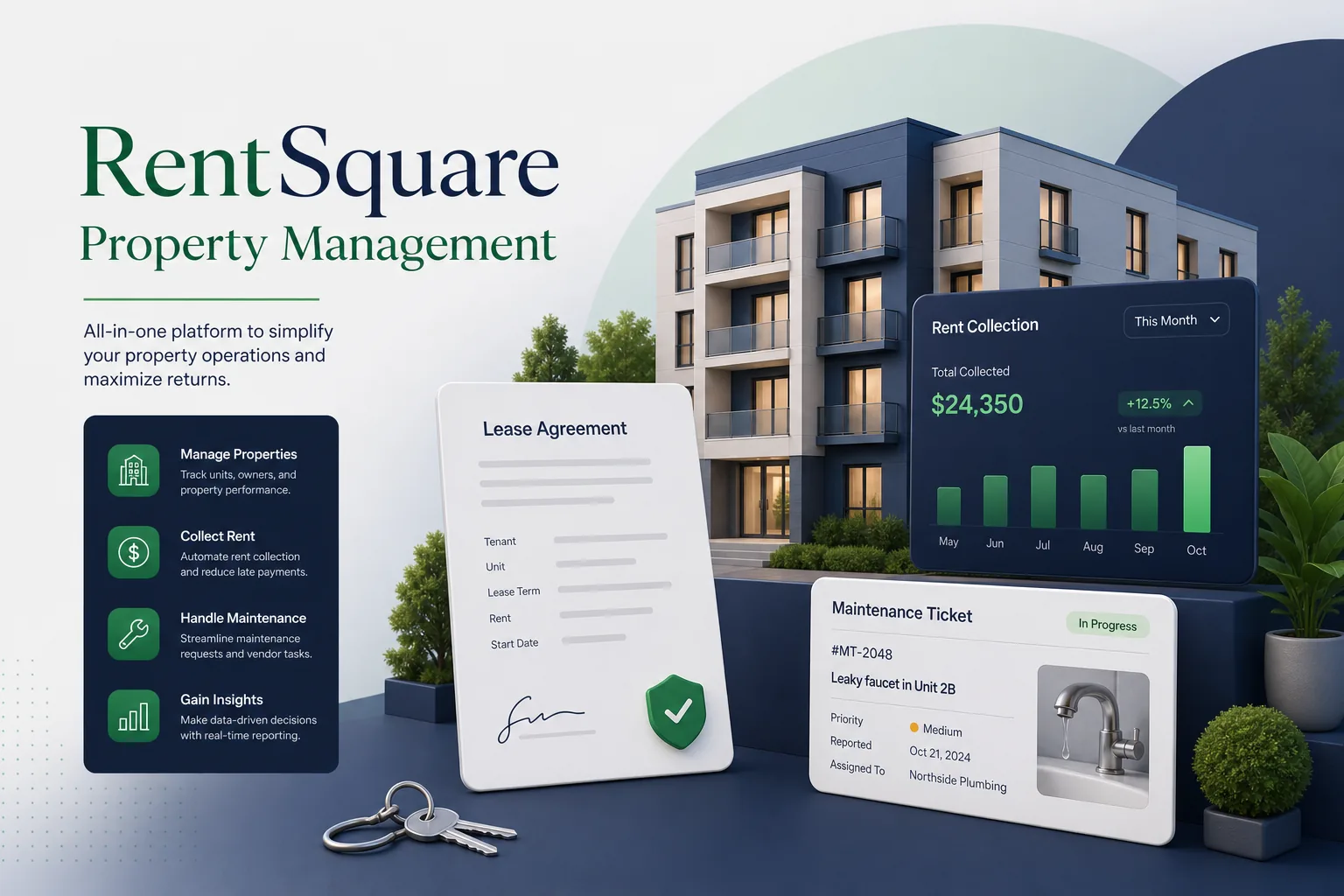
Project overview
We built a rental property management platform for a company managing apartments and single-family homes on behalf of private landlords. Staff handle listings, applications, leases, rent and maintenance; tenants pay and report issues online; landlords see statements for their own properties.
The engagement covered discovery, UX, a Rails back end, a React front end, a Postgres data model, data migration and launch. It is part of our real estate app development work and sits alongside our real estate software project.
The client and the challenge
Leases lived in shared folders, rent was tracked in a spreadsheet updated from bank statements, and maintenance requests arrived by phone and text with no record of who was dispatched. Landlords waited until month end for statements and often called to ask about vacancies or repairs. Applicant screening depended on which staff member took the enquiry, so criteria and paperwork varied between properties, and personal documents were kept in email long after a decision was made.
The company wanted one system of record for units and leases, online rent with automatic late fees, tracked maintenance tickets with vendor assignment, and a consistent, consent-based screening process for applicants.
Solution architecture & delivery
The Postgres model is organised around properties, units, leases and a double-entry tenant ledger. When a lease is signed, Rails schedules recurring charges for rent, parking or pet fees; a nightly job posts charges on due dates and applies late fees according to the grace period and caps configured per property. Payments and credits are posted against the oldest open charges, so tenant balances and landlord statements always reconcile.
Tenants pay by bank transfer or card through a payment provider, with autopay optional. Payment webhooks mark charges paid and failed payments reverse the posting and notify the tenant. Owner statements are generated from the ledger each month, net of management fees and maintenance costs, with PDF and CSV exports. Security deposits are held in a separate liability account per lease, and move-out deductions for damage or unpaid rent are itemised against it before the balance is refunded, giving tenants a clear statement.
Maintenance tickets are raised by tenants with photos, category and permission-to-enter. Staff triage them by urgency, assign a vendor, and the vendor updates status and uploads an invoice through a limited portal. Approved invoices post as expenses to the right property, and tenants are notified by email and SMS as the ticket moves.
Applicants complete an online application and give explicit consent before any background or credit check is requested from a screening partner. Screening results are visible only to authorised staff, criteria are applied consistently per property, and documents are deleted according to a retention policy. The React dashboard uses role-based access so landlords only see their own portfolio.
Key features we built
- Property, unit and lease records with renewal and move-out workflows
- Tenant ledger with recurring charges, late fees and payment allocation
- Online rent payments with autopay and failed-payment handling
- Monthly owner statements with PDF and CSV export
- Maintenance tickets with photos, urgency triage and vendor assignment
- Vendor portal for status updates and invoice upload
- Consent-based applicant screening with restricted access and retention rules
- Role-based dashboards for staff, landlords, tenants and vendors
How we delivered it
- Discovery. Mapping leasing, accounting and maintenance workflows with property managers and bookkeepers, including late fee rules that varied between properties.
- UX and prototype. Prototypes of the staff dashboard, tenant portal and ticket flow reviewed with staff and a small group of tenants.
- Build. Two-week sprints on the ledger, payments, maintenance and screening, with ledger logic covered by automated tests against real historical scenarios.
- Migration. Import of units, active leases and opening balances from spreadsheets, reconciled with bookkeepers before the first live rent cycle.
- Launch and support. Portfolio-by-portfolio roll-out and ongoing support, with the staged environments described in our CI/CD pipeline.
Technology choices
- Rails — fast development of CRUD-heavy workflows, background jobs for billing runs and mature conventions for payments and notifications.
- Postgres — transactional safety for the tenant ledger, constraints that keep balances consistent, and solid reporting queries.
- React — responsive, component-based dashboards and portals that share UI across staff, landlord, tenant and vendor roles.
Outcomes
- Rent is collected online with late fees applied consistently instead of calculated by hand
- Tenant balances and owner statements reconcile from a single ledger
- Maintenance requests are tracked from report to vendor invoice in one place
- Landlords check statements, vacancies and repairs themselves rather than calling staff
- Applicant screening follows one consent-based process for every property
FAQ
How does the platform handle late fees and partial payments?
Recurring charges are posted by a nightly job, and late fees follow the grace period and caps set per property. Payments are allocated to the oldest open charges, so partial payments leave a clear remaining balance.
How is tenant screening kept compliant?
Applicants give explicit consent before any check is requested, results are restricted to authorised staff, criteria are applied consistently per property and documents are removed under a retention policy. Adverse decisions are recorded with the criteria that applied, so staff can explain an outcome to an applicant if asked.
Can landlords and vendors log in too?
Yes. Landlords see statements for their own properties and vendors see only tickets assigned to them. See our real estate industry page and AI property valuation case study for related work. Tenants can view their ledger, download receipts, sign renewals and follow each maintenance request from the same portal, which removed most routine phone calls to the office.
What does a property management platform like this cost?
Cost depends on accounting depth, payment and screening integrations and migration. Use our SaaS development cost calculator for an indicative range, or contact us for a quote.
Rental Property Management Platform screens
Build your next real estate product with Next Olive
Share your requirements — we will propose scope, timeline and stack within one business day.