
Meditation and Sleep Stories App
A meditation and sleep app with guided sessions, sleep stories and a private mood journal, built with React Native and Firebase for a wellness brand's subscribers.
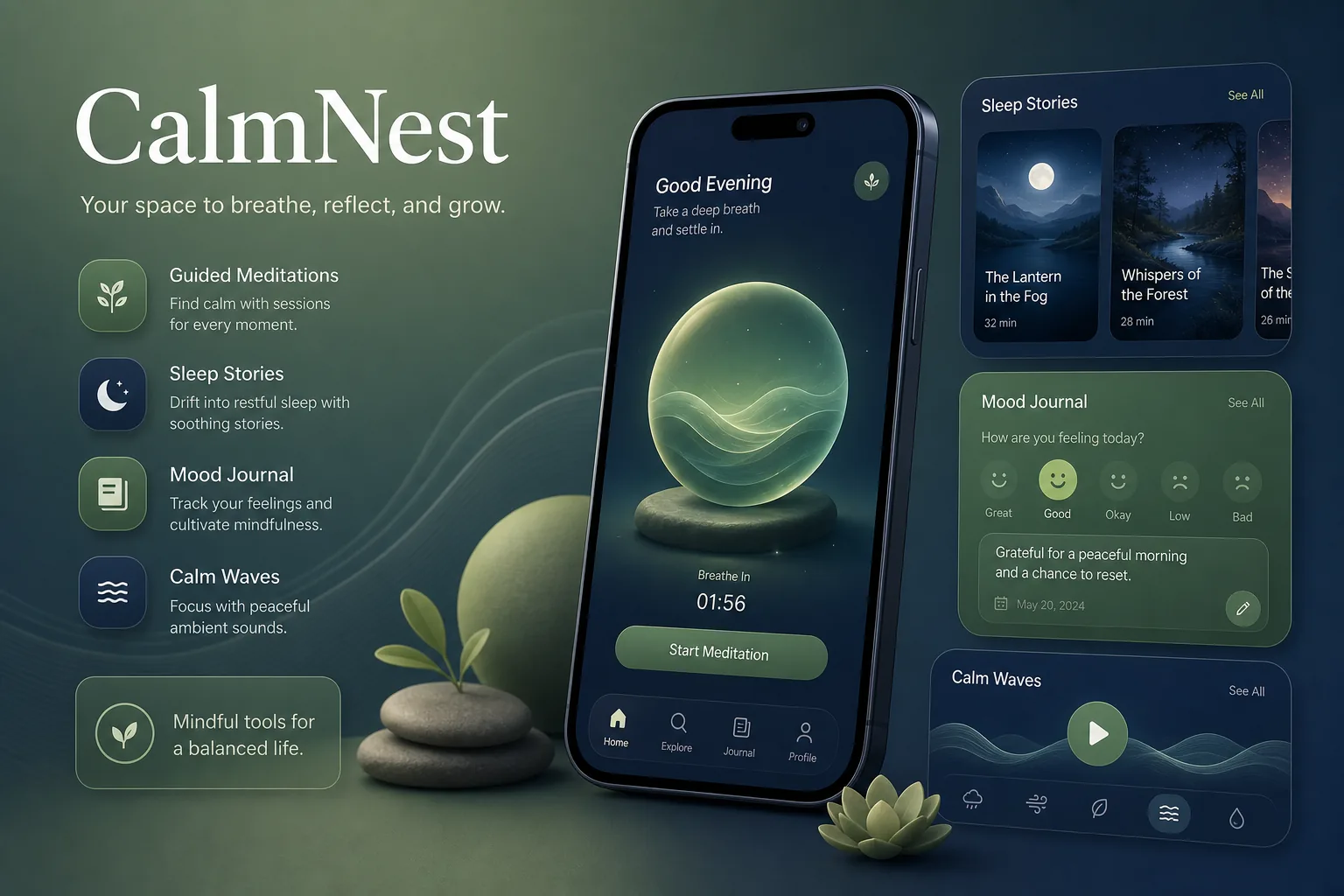
Project overview
We built a meditation app for a wellness brand that already produced audio content for its community. Subscribers use it to follow guided meditations and courses, fall asleep to stories and soundscapes, and keep a short mood journal that shows how they feel over time.
Our work covered UX and visual design, React Native apps, a Firebase back end, subscriptions, audio delivery and a content dashboard. It sits within our mobile app development work for consumer wellness and subscription products.
The client and the challenge
The brand's audio lived on podcast platforms and video channels, with no way to structure courses, remember where a listener stopped or offer premium content. Listeners also asked for sessions that keep playing with the screen off and work on flights. Listeners found it hard to follow a multi-week course when episodes were mixed with unrelated uploads, and the brand could not see which sessions people actually finished.
A mood journal holds sensitive personal reflections, so the client wanted it to be private by design, and they needed their content team to schedule new sessions and seasonal collections without a developer.
Solution architecture & delivery
We chose React Native for a shared iOS and Android codebase and paired it with a native audio playback module. Sessions play in the background with lock-screen controls, fade out with a sleep timer, and can be mixed with a looping ambient sound track at a separate volume. Playback position is saved regularly and synced, so a listener who falls asleep can resume a story on another device from where it stopped.
Audio files sit in cloud storage behind a content delivery network, while session metadata, courses and collections live in Firebase. Premium sessions are served through short-lived signed links checked against the user's subscription status. Downloaded sessions are stored in the app's private storage and remain available offline while the subscription is active.
Subscriptions use the app stores' in-app purchase systems. Receipts are verified server-side in Firebase functions, which update an entitlement flag on the account so access works the same on both platforms and after reinstalling. Trial periods, upgrades and cancellations are reflected through store notifications, so a lapsed subscriber loses premium access to downloads without needing to open the app online.
The mood journal is designed as private by default. Entries are stored under the user's own account with security rules preventing access by anyone else, journal text is excluded from analytics, an optional passcode or biometric lock protects the journal screen, and users can export or permanently delete entries. The app avoids clinical claims and links to support resources when a user selects a low mood several days running. Recommendations use only listening history and stated goals, never journal text.
Key features we built
- Guided meditations, multi-day courses and breathing exercises
- Sleep stories and ambient soundscapes with a sleep timer
- Background playback with lock-screen controls
- Offline downloads for subscribers
- Private mood journal with trends and optional biometric lock
- Personalised recommendations based on goals and listening history
- Gentle reminders and mindful streaks
- Subscriptions, free trial and a content dashboard for scheduling releases
How we delivered it
- Discovery. Workshops with the brand's teachers and content team to organise the library into courses and collections, and define the journal's privacy rules.
- Design. Calm visual design and sound-first prototypes tested with existing listeners, including night-time use in dark mode, with our UI/UX design team.
- Build. Two-week sprints covering the player, content model, subscriptions, journal and dashboard, with automated release builds.
- Beta. A test-track beta for community members, focused on background playback across devices, downloads and purchase restoration. Testers used a range of older and newer phones, because background audio behaviour varies between device makers.
- Launch and support. Store launch with the brand's audience, then regular content drops, OS updates and feature iterations.
Technology choices
- React Native — one team shipping iOS and Android together, with a native audio module for dependable background playback. Shared code also kept both stores on the same release schedule.
- Firebase — authentication, a document database with security rules, server functions for receipt checks and push notifications for reminders. Firebase also delivered crash reports from real devices.
Outcomes
- The brand's audio library is organised into courses and collections inside its own app
- Listeners can play sessions with the screen off and download them for offline use
- Premium content is protected and subscriptions work consistently across platforms
- Mood journal entries remain private to each user, with export and deletion under their control
- The content team schedules new sessions and seasonal collections without developer help
- The brand sees which sessions and courses are completed, informing what its teachers record next
FAQ
How is private journal data protected in the meditation app?
Entries are tied to the user's account and locked down by security rules, excluded from analytics, optionally protected by biometric lock, and can be exported or deleted at any time.
Why React Native for an audio-heavy app?
React Native let us share screens and logic across iOS and Android while a native module handles background audio. Our Flutter vs React Native comparison explains when each fits. Most screens, from the library to the journal, are shared code, which kept releases on both stores in step.
Can the same approach work for fitness or health apps?
Yes. Content libraries, subscriptions and habit tracking also power our fitness coach app, and privacy-first logging is used in our baby tracker app. Both apps share the same gentle approach to reminders and streaks, encouraging habits without pressure.
What does it cost to build a meditation app?
Costs depend on the audio features, personalisation, subscriptions and content tooling. Use our app development cost calculator for an indicative range, then we can plan a first release.
Meditation and Sleep Stories App screens
Build your next healthcare product with Next Olive
Share your requirements — we will propose scope, timeline and stack within one business day.